

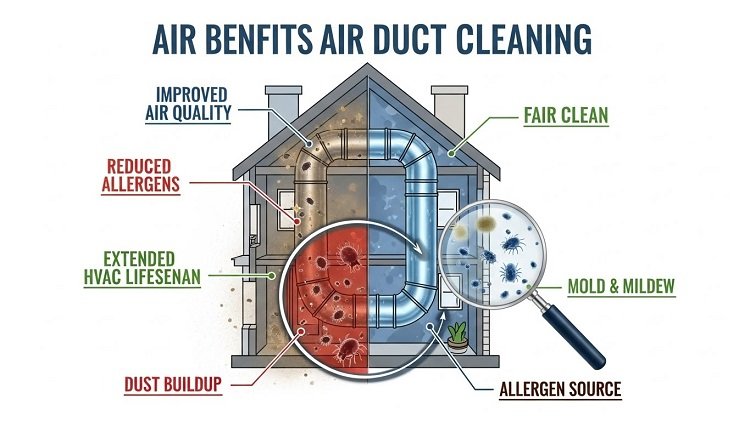
Keeping your home’s air ducts clean isn’t just about removing dust; it’s about ensuring your indoor air quality is healthy, your HVAC system runs efficiently, and your family breathes easier. Whether you’re in the UK, USA, Australia, or Canada, understanding when, why, and how air duct cleaning matters can make a significant difference to your comfort and household costs.
This guide breaks down air duct cleaning in practical, easy‑to‑understand terms, offering insights into cost expectations, frequency, signs that cleaning is needed, professional vs. DIY approaches, health considerations, and more. We’ll help you decide when air duct cleaning is worthwhile, and how to get it done right. Throughout this article, we use trusted industry data and expert guidance to inform your home improvement decisions.
What Is Air Duct Cleaning?
Understanding Your HVAC System
Your heating, ventilation, and air conditioning (HVAC) system circulates air throughout your home, pulling it in, conditioning it, and pushing it back out through a network of air ducts. These ducts can accumulate dust, dirt, allergens, and other contaminants over time, especially in high‑traffic homes or spaces with pets and smokers.
How Ducts Collect Contaminants
Air ducts accumulate debris through normal use. Every time your HVAC system operates, it draws air, along with airborne particles like pet dander, pollen, and dust, into its circulation path. Even with regular filter changes, some contaminants can bypass filtration and settle inside the ductwork.
Why Air Duct Cleaning Matters
Indoor Air Quality & Allergens
One of the biggest drivers for air duct cleaning is indoor air quality. Over time, dust and particulates can build up in HVAC systems and may recirculate throughout your home. Cleaning ducts helps remove these contaminants and can be especially beneficial for people with allergies, asthma, or other respiratory concerns.
HVAC Efficiency & Energy Bills
A clean HVAC system doesn’t have to work as hard to push air through the ducts. Removing blockages and debris can improve airflow and efficiency, potentially lowering energy bills and reducing strain on system components. According to industry data, proper HVAC maintenance, including duct cleaning, can help reduce waste in energy use.
System Lifespan and Wear & Tear
Dirt and debris around sensitive parts like fans and coils can lead to premature wear. By keeping ducts clean and maintaining the system, you may extend the lifespan of your HVAC components.
Odour Removal & Comfort Boost
Persistent or musty odours coming from vents may be a sign of buildup or even mould growth. Cleaning can help refresh airflow and reduce unpleasant smells.
Signs Your Air Ducts Need Cleaning
Visible Dust & Residue Around Vents
If dusty buildup appears around duct openings or vents even after regular cleaning around the house, it might signal deeper duct accumulation.
Musty or Persistent Odours
A lingering, musty smell from vents is a common sign that duct cleaning could be beneficial. This may reflect mould or microbial growth within the system.
Reduced Airflow or Hot/Cold Spots
Uneven airflow or rooms that struggle to reach desired temperatures can indicate blockages or contaminant buildup affecting system performance.
Increased Allergy or Respiratory Symptoms
If allergy symptoms are noticeably worse when your HVAC is running, accumulated dust and allergens in your ductwork could be contributing.
How Often Should You Clean Your Air Ducts
General Recommendation: 3–5 Years
While the U.S. EPA does not recommend routine cleanings, many industry groups suggest every 3–5 years as a general guideline for most homes.
When to Do It Sooner
Homes with pets, smokers, or occupants with allergies may need more frequent cleaning, every 2–3 years, due to faster buildup of contaminants. Extra cleaning after renovations or water damage is also advisable.
Professional vs DIY: What You Need to Know
Pros & Cons of Professional Service
Professional air duct cleaners use specialised tools, high‑powered vacuums, and techniques designed to remove deep‑seated debris. This thorough cleaning is difficult or unsafe to replicate with household equipment alone.
Why DIY Often Falls Short
Home vacuums and basic brushes are not designed to safely reach deep inside duct systems. DIY attempts can stir up contaminants, push dust deeper into the system, or even damage components.
Tools & Techniques Used by Pros
Certified technicians often use HEPA filtration vacuums, agitation brushes, and inspection cameras to evaluate and clean ducts safely and effectively.
Step by Step: What Happens in a Professional Cleaning
Inspection & Risk Assessment
A professional will often start with a visual inspection (sometimes with cameras) to assess contamination and accessibility.
Agitation & Debris Removal
Technicians use brushes and mechanical agitation to dislodge debris from duct surfaces.
HEPA Vacuuming & Sanitisation
Powerful vacuums with HEPA filters remove dislodged dust and contaminants. Sanitiser application may be used in some cases, though effectiveness varies.
Cost Expectations Around the World
Comparative Pricing Table
| Region | Typical Price Range | Notes |
|---|---|---|
| USA | $450 – $1,000+ USD | Based on EPA/NADCA estimates, additional services cost more. |
| United Kingdom | £180 – £1,000+ GBP* | UK prices vary widely; larger systems cost more. |
| Canada | CAD 300 – 600+* | Regional variation: thorough cleaning costs more. |
| Australia | AUD 400 – 800+* | Australian HVAC servicing costs vary; local rates apply. |
*Regional prices vary based on system size, number of vents, and service scope.
Factors That Influence Cost
Costs depend on home size, number of registers, accessibility, contamination level, and any additional services like dryer vent cleaning or UV sanitisation.
Choosing the Right Air Duct Cleaning Company
Check Credentials & Certifications
Look for technicians with NADCA certification or equivalent local qualifications, ensuring they meet professional standards.
Red Flags & Avoiding Scams
Beware of extremely low prices or promises of health cures; reputable providers offer transparent pricing and clear scopes of service.
Questions to Ask Before Hiring
Ask about equipment, inspection procedures, cleanup processes, and guarantees before booking.
Health & Safety Considerations
Mould & Moisture Risks
If mould or moisture issues are present, address the underlying cause before cleaning to prevent recurrent contamination.
Chemical Treatments & Cautions
Chemical biocides and sealants should be used cautiously; the EPA notes that the effectiveness of these products is not fully proven and may carry risks.
Hidden Pests & Debris
Rodents or insects in HVAC systems require targeted pest control in addition to cleaning.
Air Duct Cleaning Myths Debunked
“It Solves All Allergy Problems”
While cleaning can reduce dust carriers, indoor air quality is influenced by many factors; filters, ventilation, and sources of pollution matter too.
“Annual Cleaning Is Always Needed”
Experts don’t recommend annual duct cleaning for most homes; three to five years is typical.
“DIY Vacuums Are Enough”
Home tools don’t provide the deep clean that professionals can deliver, and can make dust worse.
How to Maintain Clean Air Ducts Long‑Term
High‑Quality Filters & Change Schedules
Using high‑efficiency filters and changing them regularly helps keep ducts cleaner longer.
Regular HVAC Servicing
Annual servicing of your HVAC system helps catch issues before they escalate.
Seasonal Maintenance Tips
Consider inspection and filter changes before peak seasonal use, like summer cooling and winter heating.
Quick Takeaways
- Air duct cleaning can improve air quality and HVAC efficiency when needed.
- Cleaning is typically recommended every 3–5 years, depending on conditions.
- Costs vary widely by region and system size.
- Professional cleaning is more effective than DIY.
- Watch for signs like odours, dust, allergies, and airflow issues.
Conclusion
Whether you’re planning routine home maintenance or addressing specific air quality concerns, understanding air duct cleaning helps you make informed decisions that protect both your family’s health and your investment in your home. While routine cleanings aren’t necessary in every case, professional services can bring significant benefits, especially when signs point to buildup or inefficiency. Use trusted professionals, compare quotes, and prioritise regular HVAC maintenance to keep your system running smoothly and your indoor air as clean as possible. When in doubt, start with a professional inspection and base your cleaning schedule on actual needs.
Frequently Asked Questions
1. How often should I have my air ducts cleaned?
Typically, every 3–5 years, though factors like pets or allergies may justify more frequent cleanings.
2. Will air duct cleaning improve my HVAC efficiency?
Yes, removing debris can help your system move air more easily, improving performance and potentially lowering energy use.
3. Can I clean my air ducts myself?
DIY methods usually fall short; professionals use specialised tools that your home equipment can’t replicate.
4. What signs show duct cleaning is needed?
Musty odours, visible dust, reduced airflow, and allergy symptoms are common indicators.
5. Are chemical sanitisers necessary?
Chemical treatments aren’t always necessary and should be used cautiously; consult a professional before opting for them.
Reader Engagement
Thanks for reading! Did you find this air duct cleaning guide helpful? Share your experience below. Have you ever had your ducts cleaned? What difference did it make in your home comfort or energy bills? If you enjoyed this article, please share it on social media to help others improve their indoor air quality!