

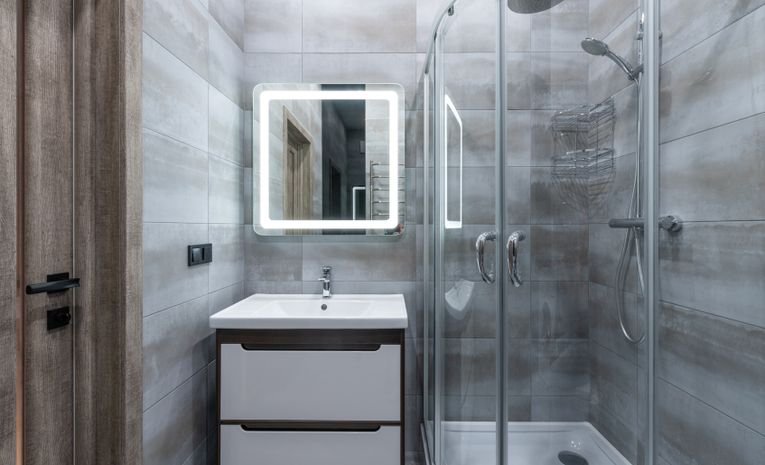
Quick answer: Spray the glass with a white vinegar and water solution, leave it for a few minutes, then scrub with a non-scratch sponge. Use a squeegee in downward strokes to remove the liquid and prevent new watermarks. For stubborn limescale, apply an acidic cleaner like citric acid or vinegar and leave it for twenty to thirty minutes before wiping.
A shower screen can go from crystal clear to permanently cloudy faster than almost any other surface in the house, simply because it deals with hard water splashing and drying on it every single day. The cloudiness is limescale, and while there is no shortage of unusual online tips for shifting it, a few tried and tested methods do the job reliably without any special products.
Why Shower Screens Get Cloudy
The white marks and streaks on a shower screen are limescale, the residue left behind when hard water evaporates from the glass. Water in most parts of the UK contains dissolved calcium and magnesium, and every time droplets dry on the glass rather than being wiped away, a small amount of mineral deposit is left behind. Over time, this builds into the chalky, cloudy film that makes a shower screen look permanently dirty even right after cleaning.
What You Will Need
- White vinegar, or a specialist shower glass cleaner
- Bicarbonate of soda
- A non-scratch sponge or microfibre cloth
- A squeegee
- A spray bottle
Step 1: Spray and Let It Work
- Mix equal parts white vinegar and water in a spray bottle, or use a shop-bought shower glass cleaner.
- Spray the entire screen generously, covering the glass and frame edges where grime tends to gather.
- Leave it to sit for a couple of minutes so the acidity has time to start breaking down soap scum and mineral deposits.
Step 2: Scrub Gently
- Using a non-scratch sponge or microfibre cloth, scrub the glass in circular motions, paying extra attention to corners and the bottom edge where limescale collects most.
- Avoid steel wool or other abrasive pads, since these can scratch the glass permanently, leaving marks that are far harder to fix than limescale ever was.
Step 3: Squeegee for a Streak-Free Finish
- Spray the screen once more with your cleaning solution.
- Pull a squeegee down the glass in smooth, overlapping downward strokes, wiping the blade clean between passes.
- Finish by wiping any remaining moisture from the edges and frame with a dry cloth.
Tackling Stubborn Limescale
If a first pass with vinegar doesn’t fully clear it, escalate to a stronger, more targeted approach for the worst patches.
- Cut a lemon in half and rub the cut side directly onto the stubborn limescale, using gentle circular motions and squeezing occasionally to release more juice.
- Leave the juice to sit on the glass for five to ten minutes, then rinse away with water.
- For patches that still won’t shift, mix around 20g of bicarbonate of soda with a few drops of water to form a thick paste.
- Apply the paste directly to the limescale with a soft sponge and leave it to work for fifteen to twenty minutes.
- Scrub gently, then rinse thoroughly with water.
If household methods still don’t shift particularly heavy, long-standing limescale, a commercial limescale remover formulated for glass can tackle deposits that natural methods struggle with, though always check it is safe for use on glass before applying.
Don’t Forget the Frame and Seals
Limescale and mould don’t only build up on the glass itself. Wipe down the metal frame and rubber seals with the same vinegar solution, using an old toothbrush to get into the tighter grooves where grime tends to collect unnoticed.
Preventing Limescale From Building Up Again
A few small habits make a real difference to how often you need to deep clean.
- Squeegee the glass after every shower. This single habit, done consistently, is the most effective way to stop watermarks and soap scum forming in the first place.
- Keep the bathroom well ventilated, either with an extractor fan or an open window, since good ventilation helps water evaporate faster and reduces overall humidity.
- Clean the screen little and often rather than waiting until it looks visibly bad, since light, regular cleaning is far easier than removing months of built-up limescale in one go.
- Consider a shower filter if you live in a particularly hard water area, since these reduce the mineral content of the water reaching your screen in the first place.
Related Guides
Frequently Asked Questions
Why does my shower screen keep getting cloudy?
Hard water containing calcium and magnesium leaves mineral deposits behind every time droplets dry on the glass rather than being wiped away, gradually building into the cloudy film known as limescale.
Does vinegar or lemon work better on shower glass limescale?
Both work through similar acidic action. Vinegar is better for an all-over regular clean, while lemon, thanks to its slightly abrasive rind alongside the acid, is often more effective on small, stubborn patches.
How often should you clean a shower screen?
A quick wipe or squeegee after every shower prevents build-up almost entirely. A more thorough clean with vinegar or a specialist cleaner is worth doing every one to two weeks, depending on how hard your water is.
Can a squeegee really prevent limescale build-up?
Yes. Since limescale forms as water dries on the glass, removing the water immediately after each shower with a squeegee prevents most of the mineral deposit from ever settling in the first place.
Final Thoughts
A cloudy shower screen almost always comes down to hard water rather than anything more complicated, and vinegar, lemon, and a bit of elbow grease will clear the vast majority of everyday limescale. The real secret to keeping it that way, though, is a thirty-second squeegee habit after every shower, which does more to prevent build-up than any deep clean ever will.