

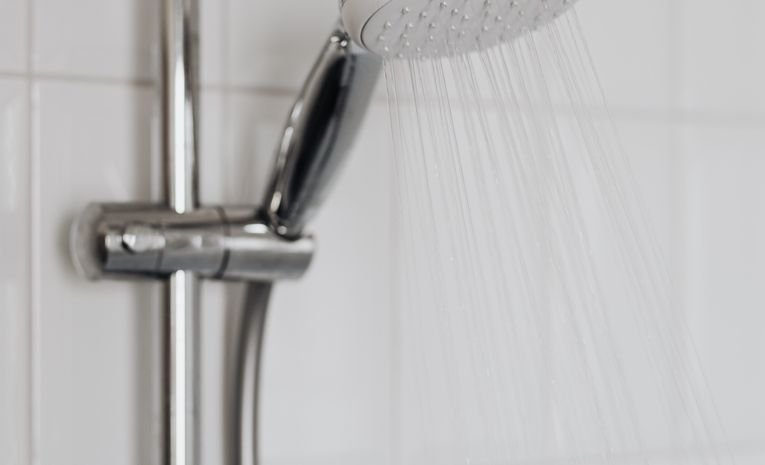
Quick answer: Remove the shower head if possible and submerge it fully in a bowl of white vinegar for at least thirty minutes, or overnight for heavy build-up. Scrub gently with an old toothbrush, focusing on the nozzles, then rinse thoroughly and run the shower to flush out any residue. If the head cannot be removed, fill a plastic bag with vinegar and tie it securely around the shower head instead.
A shower head clogged with limescale does more than look unsightly. It reduces water pressure, causes uneven spray patterns, and gets worse the longer it is left. The good news is that clearing it rarely needs anything beyond a bottle of white vinegar and a bit of patience.
Why Limescale Builds Up on Shower Heads
Limescale is made up of calcium and magnesium deposits left behind by hard water as it evaporates or passes through the small nozzles of a shower head. Since shower heads are used frequently and often have dozens of tiny holes, they are particularly prone to blockages compared with larger fittings like taps.
Signs Your Shower Head Needs Descaling
- Uneven spray, with some jets weaker than others or missing entirely
- Visible white or chalky crust around the nozzles
- Noticeably reduced water pressure compared with when the shower was new
- Water spraying at odd angles rather than in a consistent pattern
What You Will Need
- White vinegar
- A bowl or container large enough to submerge the shower head
- An old toothbrush
- A sandwich bag and rubber band, for shower heads that cannot be removed
- A pin or needle, for clearing individual blocked nozzles
Method 1: Removable Shower Heads
- Unscrew the shower head from the hose. Some models allow you to unscrew the front section separately for a more thorough clean.
- Fill a bowl with white vinegar and fully submerge the shower head.
- Leave it to soak for at least thirty minutes, or overnight for heavier limescale build-up.
- If the shower head is made of brass, do not leave it in vinegar for longer than thirty minutes, since prolonged exposure can damage the metal.
- Remove the shower head and scrub gently with an old toothbrush, paying close attention to the nozzles where limescale gathers most.
- Rinse thoroughly under running water, using a pin to clear any nozzles that are still blocked.
- Reattach the shower head and run the water for a minute to flush out any remaining residue.
Method 2: Non-Removable Shower Heads
Not every shower head can be unscrewed, but that does not mean you are stuck with the limescale.
- Fill a plastic sandwich bag with white vinegar, enough to fully submerge the head of the shower.
- Secure the bag around the shower head with a rubber band, making sure it is completely immersed in the vinegar.
- Leave it in place for a few hours, or overnight for stubborn build-up.
- Remove the bag and give the shower head a gentle scrub with an old toothbrush.
- Rinse thoroughly and run the shower to check the spray pattern and flush out any loosened deposits.
Quick Method: Simmering in Vinegar
If the shower head is removable and small enough, placing it in a saucepan of vinegar and bringing it to a gentle simmer for a few minutes can dissolve limescale faster than soaking alone. Keep a close eye on it and avoid overheating, particularly with plastic components, which can warp under too much heat.
Is It Really Limescale, or a Pressure Problem?
If you have cleaned the shower head thoroughly and the flow is still poor, the cause might not be limescale at all. You can test this with a simple flow check: place a bucket under the shower, run it for thirty seconds, then measure the volume of water collected and double it to get litres per minute. A typical shower should deliver around eight to twelve litres per minute, depending on the system. If flow remains low despite a clean shower head, the issue could be a blockage elsewhere in the pipework, or a pressure-reducing valve on the incoming supply that is faulty or incorrectly set. In these cases, it is worth having a plumber investigate rather than assuming more descaling will help.
Preventing Limescale From Coming Back
- Wipe the shower head down with a dry cloth after each use, since drying water droplets is what eventually leaves mineral deposits behind.
- Descale on a regular schedule rather than waiting until performance clearly drops.
- Consider a water softener fitted to your mains supply if you live in a particularly hard water area. This removes calcium and magnesium before it reaches your plumbing, significantly reducing new limescale throughout the home, not just on the shower head.
How Often Should You Descale a Shower Head?
Once a month is a sensible baseline for most UK households, particularly in hard water areas. If you notice performance dropping sooner than that, there is no harm in descaling more frequently, since limescale only gets more stubborn to remove the longer it is left.
Related Guides
Frequently Asked Questions
How often should you descale a shower head?
At least once a month for most households, and more often in particularly hard water areas or if you notice reduced pressure sooner than that.
Can vinegar damage a brass shower head?
Yes, if left too long. Limit soaking time to thirty minutes for brass fittings, compared with longer soaks that are fine for chrome, stainless steel, or plastic.
How do I clean a shower head that doesn’t come off?
Fill a sandwich bag with white vinegar, secure it around the shower head with a rubber band so it is fully submerged, and leave it for a few hours or overnight before scrubbing and rinsing.
Does limescale really reduce water pressure?
Yes, it can block or narrow the nozzles, reducing flow. If cleaning does not restore pressure, the cause may lie elsewhere in the plumbing rather than the shower head itself.
Final Thoughts
A shower head clogged with limescale is one of the simplest bathroom problems to fix, usually needing nothing more than white vinegar and a bit of soaking time. Keep on top of it with a regular monthly clean, and consider a water softener if hard water is a persistent issue throughout your home.