

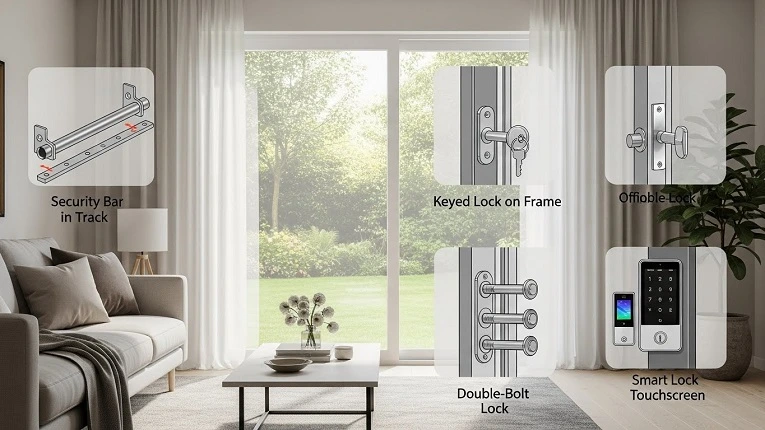
Sliding doors are a modern favorite for patios, balconies, and interior spaces because they offer natural light, easy access, and a sleek design. However, their convenience doesn’t always translate to strong security, especially if the standard latch lock that comes with many sliding doors is your only defense. That’s where a sliding door lock becomes essential for general homeowners seeking both safety and peace of mind. A quality sliding door lock not only protects your home from forced entry but also adds child safety, energy efficiency, and daily convenience.
In this guide, you’ll learn about the most effective sliding door lock types, including security bars, keyed locks, deadbolts, and smart locks. We’ll explain how they work, compare best practices for installation, and help you choose the right lock based on your lifestyle and security needs. Whether you want a simple DIY upgrade or a more tech‑centric solution with remote access, this article covers everything you need to know to make your sliding door a secure, reliable part of your home.
Types of Sliding Door Locks
When securing a sliding glass door, it’s important to understand that not all locks are created equal. Each type serves different purposes, from basic deterrence to advanced layered security. Combining multiple locking methods often provides the best protection.
1. Standard Mortise Locks
Many sliding doors include a built‑in mortise lock. These locks fit within the door frame and use a latch or hook‑style bolt to catch the strike plate. While they provide baseline security and maintain a clean look, they often only offer a single locking point, which can be insufficient against forced entry attempts. Homeowners typically augment these with additional locks for stronger protection.
2. Security Bars and Track Blocks
Security bars (also called patio or charley bars) are among the most popular and effective sliding door locks for homeowners. These adjustable metal or wooden rods sit in the door track and physically prevent the door from sliding open, even if an intruder bypasses the latch. They’re inexpensive, simple to install, and highly visible, which itself can deter burglars.
Track blocks or pins perform a similar role but attach directly to the track’s hardware. While less visible, they also stop the door from moving horizontally. Both security bars and track locks are excellent secondary locks that significantly enhance overall security.
3. Keyed Sliding Door Locks
For exterior doors like patio entrances, keyed locks are a strong option. These replace or supplement the basic mortise lock and require a key to operate. Many models feature corrosion‑resistant steel construction designed for durability and added tamper resistance. They strike a balance between traditional locking mechanisms and enhanced security, making them ideal for homeowners who want something more secure than the factory latch.
4. Double‑Bolt & Multi‑Point Locks
Double‑bolt or multi‑point locks secure the sliding door in more than one location, often at both top and bottom. This distributes the locking force and makes it much harder for intruders to force the door open or lift it off its track. These are typically installed by drilling into the door and frame, and they’re a top choice when maximizing resistance to break‑ins is a priority.
5. Smart & Electronic Locks
Smart sliding door locks represent the future of home security. These electronic locks can often be controlled via smartphone apps, keypads, or even biometric inputs like fingerprints. They may also provide real‑time alerts, remote locking, and integration with broader smart home systems. This convenience layer is ideal for general homeowners who want keyless entry and activity monitoring without sacrificing security.
6. Deadbolts Adapted for Sliding Doors
While traditional deadbolts are more common on hinged doors, some sliding door adaptations are available. These deadbolts add a solid metal bolt into the frame, which provides much stronger resistance to forced entry than standard latching systems. A deadbolt can be an effective option when paired with another sliding door lock.
Benefits of Installing a Sliding Door Lock
A sliding door lock offers more than just security; it enhances your everyday living experience in multiple ways:
Enhanced Home Security
The most obvious benefit of a sliding door lock is improved protection against break‑ins. Options like security bars and double‑bolt locks physically resist forced entry, and keyed locks add a requirement for a physical key , a deterrent that intruders take seriously.
Child and Pet Safety
Locks that limit the door’s opening distance help prevent young children or pets from wandering outside unsupervised. Child‑specific models also offer layered security designed to be out of reach of small hands.
Energy Efficiency and Draft Control
Many modern sliding door locks, especially smart or tight‑seal models, improve airtightness. This can enhance energy efficiency by reducing drafts and helping your HVAC system maintain indoor temperature more effectively.
Convenience and Peace of Mind
Smart locks and keyed systems deliver convenience by giving access control to homeowners, whether you’re waking up, leaving for work, or letting guests in remotely. This reduces the need to hide keys or manage manual locking every time you enter.
How to Choose the Right Sliding Door Lock
Choosing the best sliding door lock depends on your specific priorities and door configuration.
1Assess Your Security Needs
If your main concern is basic break‑in prevention, a security bar or double‑bolt lock may suffice. For maximum protection, consider combining a keyed lock with a multi‑point or track pin system.
Consider Daily Convenience
Smart locks offer keyless entry and remote control, but they tend to cost more and require power or batteries. Traditional keyed locks are more affordable but require carrying a key.
Size and Compatibility
Measure your door’s width, track depth, and material (glass, aluminum, vinyl, wood) before selecting a lock. Ensuring compatibility will avoid frustrating returns and poor performance.
Installation Complexity
Temporary options like security bars or track blockers require little to no drilling and are renter‑friendly. More secure installations, like double‑bolt or electronic models, may require professional installation.
Security Best Practices
Layer Your Locks
Using more than one type of lock, such as adding a track bar plus a keyed lock, doubles the deterrent and resistance against break‑ins.
Check for Anti‑Lift Protection
Some sliding doors can be lifted out of their tracks. Anti‑lift blocks or secure track positioning prevents this exploitation.
Regular Maintenance
Locks work best when clean, lubricated, and correctly aligned. Regular inspection helps you spot wear before it becomes a vulnerability.
FAQs
Q1: Are sliding door locks necessary for every home?
Yes, especially for exterior doors like patio or balcony entries, adding a sliding door lock enhances safety and reduces forced entry risk.
Q2: Can I install a sliding door lock myself?
Many options like security bars or track pins are DIY‑friendly, while others (double‑bolt or smart locks) may require more tools or professional help.
Q3: Do smart sliding door locks work without Wi‑Fi?
Some models offer local smartphone Bluetooth control or keypad access even without Wi‑Fi.
Q4: What’s the best budget sliding door lock?
Security bars and simple track locks are typically the most affordable options while still adding significant deterrence.
Q5: Can I use a regular deadbolt on a sliding door?
Sliding doors may require specially adapted deadbolts or multi‑point systems; standard deadbolts designed for hinged doors won’t work without modification.