

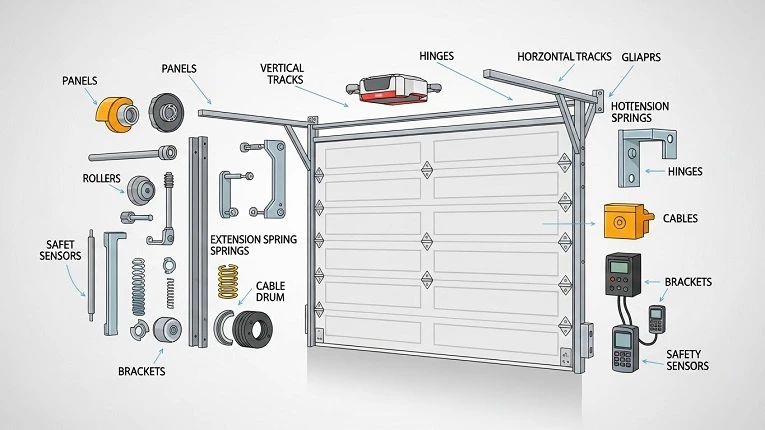
Your garage door is more than just a big panel that moves up and down; it’s a complex system of parts that must work together smoothly, safely, and efficiently. Whether you’re a homeowner troubleshooting a squeaky track, a DIYer looking up replacement parts, or simply curious about how things function, understanding garage door parts is essential to keeping your system running for years to come. From the springs that counterbalance heavy loads to weather seals that keep out drafts, each component has a specific job in the performance and durability of your garage door.
In this guide, we’ll walk through every major garage door component, explain what it does, where it’s located, and why it matters, including openers, cables, rollers, tracks, safety sensors, and more. You’ll also learn maintenance tips, signs of wear and tear, parts diagrams, and insight into when to call a professional. By the end, you’ll not only know your parts by name but also understand their role in a safe, reliable garage door system.
Understanding Garage Door Basics
Before diving into the parts, it helps to understand how your garage door system works as a whole. Most residential doors are made of panels connected by hinges, moving along tracks guided by rollers and balanced by springs. The door’s motion can be manual or automated using a garage door opener.
Knowing the system’s basics can help you diagnose problems faster. For example, if the door moves unevenly, it may indicate track misalignment or roller wear, rather than a motor issue. Learning the parts’ names also helps when calling a professional, so you can explain exactly what’s wrong.
Core Garage Door Parts Explained
Garage Door Panels and Sections
Panels make up the main body of your door. They can be steel, wood, aluminum, or composite, and are usually insulated for energy efficiency. Damaged panels can affect appearance and door operation, so homeowners often replace just the panel instead of the entire door.
Tracks: Vertical vs Horizontal
Tracks guide the door as it opens and closes. Vertical tracks run along the sides, and horizontal tracks lie along the ceiling. Over time, tracks can bend or come loose, causing the door to stick. Regularly cleaning and lubricating tracks can extend their life.
Rollers: Nylon vs Steel
Rollers reduce friction, allowing smooth movement. Steel rollers are durable but noisier, while nylon rollers are quieter and gentler on tracks. DIYers can replace rollers individually if they start squeaking or grinding.
Hinges and Brackets
Hinges connect panels and allow the door to bend along the tracks. Brackets attach springs and tracks to the frame. Loose or rusted hinges can cause misalignment, so periodic tightening is recommended.
Cables and Cable Drums
Cables connect the door to springs, transferring tension for balanced lifting. Cable drums hold the cable in place at the top of the torsion shaft. Frayed cables are dangerous; never attempt DIY replacement without proper knowledge and tools.
Spring Systems
Torsion Springs: Function & Safety
Torsion springs are mounted above the door and bear the door’s weight, making lifting easier. They’re under extreme tension; mishandling can cause serious injury. DIY homeowners should only lubricate or inspect these, leaving replacement to pros.
Extension Springs: Pros & Cons
Extension springs run along the sides and stretch when the door lowers. They’re easier to replace but noisier and less durable than torsion springs. Safety cables through the springs reduce the risk of accidents.
Spring Maintenance Tips
Regular lubrication with garage door-specific spray and checking for rust or gaps can prolong spring life. Never oil torsion springs heavily, as this can attract dust and reduce function.
Garage Door Opener & Its Components
Motor Types (Belt, Chain, Screw)
Opener motors come in belt, chain, or screw drive types. Belt drives are quieter, great for attached garages, while chain drives are durable and more affordable. Screw drives require less maintenance but may wear faster in dusty environments.
Remote Controls & Keypads
Remote transmitters allow easy access, while keypads provide entry without keys. Check batteries regularly and program new codes after moving for security.
Safety Sensors and Photo Eyes
Sensors detect obstructions, stopping the door from closing if something is underneath. Homeowners should clean the lenses periodically to maintain proper alignment.
Weatherproofing & Insulation Components
Bottom Seals and Side Weatherstripping
These keep out drafts, moisture, and pests. Replacing worn seals improves energy efficiency and comfort.
Energy Efficiency Benefits
A well-sealed and insulated door can reduce heating/cooling costs by 10–15%, making maintenance an investment, not just a safety step.
Safety & Security Hardware
Manual Locks vs Automatic Locks
Locks prevent unauthorized entry. Manual locks are simple but require remembering to lock; automatic locks integrate with the opener for convenience.
Emergency Release Cords
This allows manual door operation during power outages. Ensure it moves freely and isn’t tangled.
Safety Reversal Systems
Modern doors reverse if they hit resistance. Test monthly by placing an object in the door’s path and ensuring it reverses properly.
Specialized Parts & Accessories
Struts and Reinforcements
Struts strengthen doors against wind. They’re essential in areas with high gusts.
Windows & Aesthetic Elements
Decorative features can be replaced or upgraded for curb appeal.
Automatic Lighting & Smart Features
Some doors integrate lights or smart connectivity, adding convenience and security.
Maintenance & Troubleshooting
Routine Garage Door Checkups
- Lubricate moving parts monthly.
- Tighten bolts and screws.
- Inspect tracks, rollers, and springs.
Common Problems & Fixes
- Door sticks or jerks: Check track alignment and rollers.
- Noisy operation: Lubricate rollers and hinges; check opener motor.
- Door won’t open: Inspect cables, springs, and sensor alignment.
When to Call a Professional
- Broken springs or cables.
- Bent or damaged tracks.
- Malfunctioning openers beyond minor troubleshooting.
FAQs
1. What are the main garage door parts I should know?
Key parts include panels, tracks, rollers, hinges, springs, cables, openers, and safety sensors.
2. Can I replace garage door rollers myself?
Yes, nylon or steel rollers can usually be replaced safely by homeowners. Use proper tools and lubricate tracks.
3. How often should I inspect garage door springs?
Inspect torsion and extension springs every 6–12 months for rust or gaps; never attempt DIY replacement on torsion springs.
4. How do I know if my garage door sensors are misaligned?
If the door doesn’t close properly or reverses unexpectedly, check sensor lenses and ensure they face each other unobstructed.
5. Are weather seals necessary for energy savings?
Absolutely, worn seals allow drafts and moisture. Replacing them can improve heating/cooling efficiency by 10–15%.
Conclusion
Understanding garage door parts empowers homeowners to perform safe maintenance, troubleshoot problems, and extend the life of their doors. From panels and rollers to springs, cables, openers, and weatherproofing components, each part has a role in ensuring smooth, reliable operation. Regular inspections, lubrication, and minor DIY fixes can prevent bigger, costlier repairs and improve overall safety.
Remember, some components, particularly torsion springs and damaged cables, are dangerous to handle. When in doubt, calling a professional ensures safety and efficiency. Equipped with this knowledge, you can confidently maintain your garage door, save money, and prevent downtime.