
Understanding Water Damage
Water damage isn’t just visible water on your floor; it’s any unwanted liquid intrusion that weakens your home’s structure or invites hazards like mold and bacteria. It can be caused by a burst pipe, clogged gutters, leaking roofs, flooding, or appliance malfunction. What separates one cleanup scenario from another often comes down to the type of water involved.
Professionals categorize water damage by contamination level:
- Clean water – from sinks, faucets, and rainwater without contaminants.
- Gray water – from dishwashers, washing machines, or toilet overflow (no solids).
- Black water – sewage or floodwater containing biological hazards and pathogens.
Knowing the category helps determine cleanup urgency and safety precautions; for instance, Category 3 (black) requires specialized PPE and often professional help.
First Steps After Water Damage
Ensure Safety First
Your safety always comes first. Water and electricity are a dangerous combo; cut power to affected areas before stepping into water-soaked spaces. Wear protective gloves, waterproof boots, and eye protection before touching any water or debris.
Stop the Source of Water
If the water’s source is a burst pipe or appliance leak, shut off the water at the main valve. Stopping the flow immediately limits how far water spreads and reduces the materials affected.
Document Damage for Insurance
Before removing anything, take photos and videos of all damage. Insurers often require documentation to process claims, especially for structural elements and expensive items.
Water Removal and Extraction
Standing water is the enemy; the longer it sits, the more damage it does. Removing water quickly prevents structural weakening and keeps mold from taking hold.
Tools & equipment:
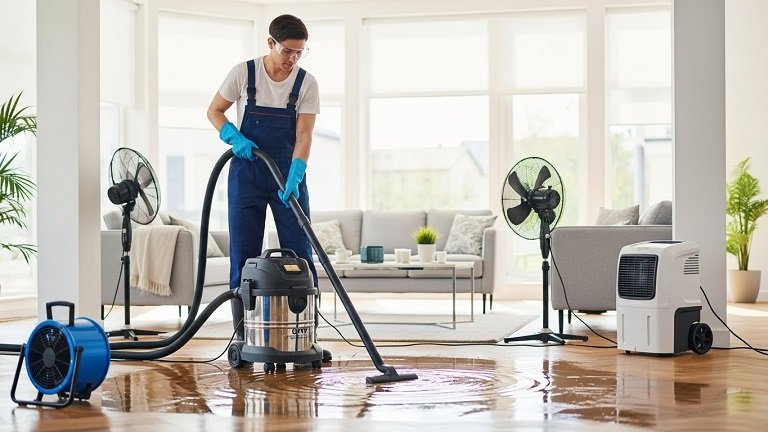
- Wet/Dry Vacuums for moderate water levels.
- Submersible Pumps for larger floods.
- Squeegees, buckets, and towels for small spills.
Renting professional-grade extractors or hiring a restoration team helps when water levels are high or spread through walls and floors. Quick, effective extraction also speeds up the drying phase.
Drying and Dehumidification
After extraction, dampness often remains deep inside materials like drywall, wood, and furnishings. Surface dryness doesn’t mean the job’s done.
Critical steps include:
- High-velocity fans and air movers to circulate dry air.
- Dehumidifiers pull moisture out of the air.
- Moisture meters to verify that all materials reach safe moisture levels.
Proper drying prevents swelling, warping, and, most importantly, mold growth. Mold spores can begin colonizing within 24–48 hours after water exposure, so speedy action is key.
Cleaning and Sanitization
Once drying begins, it’s important to clean and disinfect all affected surfaces to remove contaminants. Even clean water can pick up bacteria and pollutants. For hard surfaces, a mild detergent followed by a disinfectant solution helps reduce risks.
Discard materials that cannot be effectively dried or disinfected, such as soaked insulation, carpets with stubborn odors, or heavily contaminated materials.
Mold Prevention and Remediation
Mold prevention isn’t optional; it’s a major part of water damage cleanup. As moisture lingers, spores can grow on porous surfaces like wood and drywall.
Look for:
- Musty odors
- Discolored patches
- Visible fuzzy growths
If mold is detected or suspected, professional remediation services may be necessary. They use containment, HEPA filtration, and specialized cleaners to remove mold safely.
Structural Assessment and Repairs
After cleanup and drying, inspect your home for structural issues:
- Cracks in the walls or foundation
- Warping of flooring or counters
- Sagging ceilings
Replace damaged drywall, flooring, and insulation as needed. Structural repair may involve a contractor, especially if load-bearing elements are affected.
DIY vs. Professional Cleanup
Minor leaks or small floods may be manageable for DIYers with the right tools. Larger floods, black water contamination, or damage involving electrical systems should prompt a call to professional water damage restoration services. Professionals have industrial-grade equipment and OSHA/IICRC-trained crews to handle complex situations safely.
Insurance and Cost Considerations
Water damage cleanup costs vary widely based on severity and coverage. Minor leaks may cost a few hundred dollars, while major flooding can cost tens of thousands. Documenting damage and understanding your policy’s coverage is critical for minimizing out-of-pocket costs.
Preventing Future Water Damage
Prevention saves money and stress:
- Clean gutters and downspouts annually.
- Install water leak detectors near sump pumps and appliances.
- Ensure yard grading directs water away from the foundation.
- Test and insulate pipes in extreme temperatures.
Proactive maintenance helps avoid future incidents and qualifies homeowners for insurance incentives.
Key Takeaways
- Safety first: Always turn off electricity and wear protective gear during cleanup.
- Stop water source: Immediate action limits the extent of damage.
- Remove water quickly: Standing water causes the most damage.
- Thorough drying prevents mold: Moisture control stops secondary damage.
- Professional help is wise, especially for contaminated or extensive water intrusion.
Conclusion
Water damage cleanup is a multi-step process that requires urgency, planning, and the right tools. From initial safety measures and water extraction to drying, mold prevention, and restoration, each stage plays a vital role in protecting your home’s health and value. Quick action not only reduces costly repairs down the line but also safeguards your indoor air quality and prevents hazardous mold growth. Whether you tackle a minor leak yourself or bring in professionals for larger restoration efforts, understanding the complete process empowers you to make smarter, safer home improvement decisions.
FAQs
-
What is the first step in water damage cleanup?
Turn off electricity in affected areas and wear protective gear before stepping into the water-damaged zone. -
How soon should drying begin after water removal?
Drying should start immediately, ideally within the first 24 hours, to prevent mold. -
Can I clean up black water myself?
No, black water (sewage or flood-contaminated) carries pathogens and should be handled by professionals. -
How does a dehumidifier help?
It removes excess moisture from the air, speeding up drying and preventing mold growth. -
Will insurance cover water damage cleanup?
It depends on your policy; sudden accidents like burst pipes are usually covered, while gradual leaks may not be.